

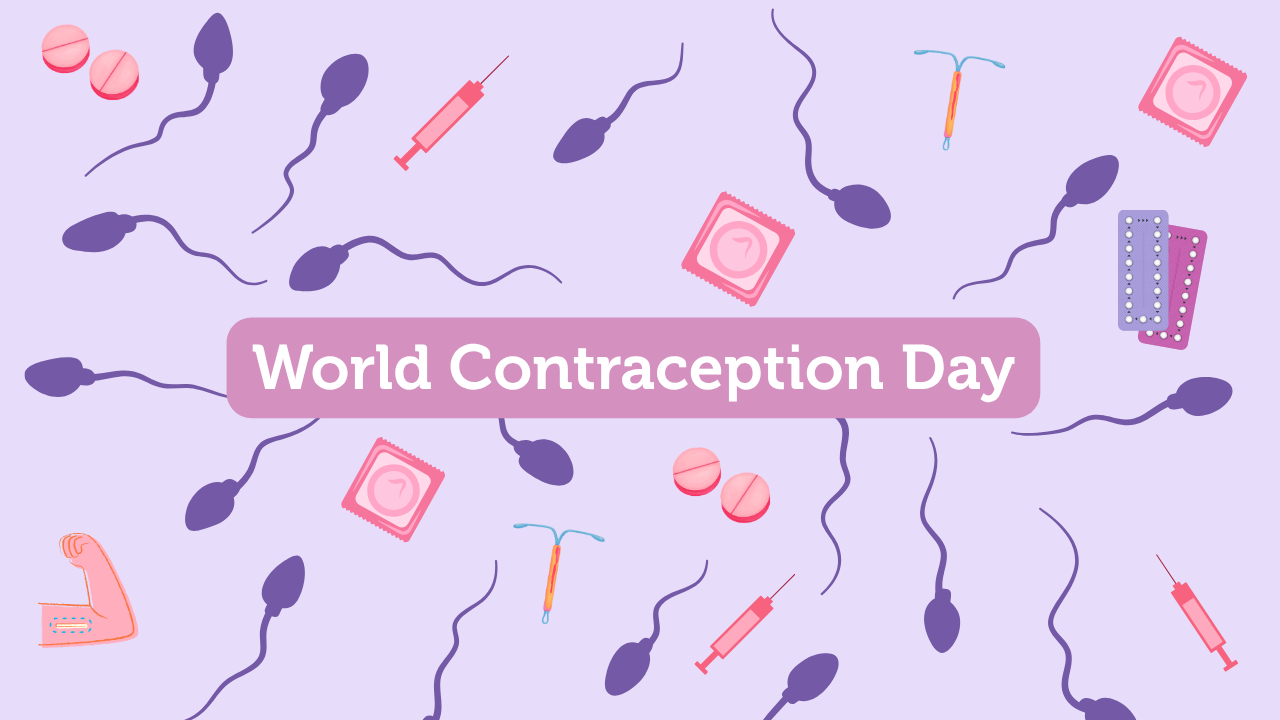
World Contraception Day: What is Contraception?
Contraception is a way of preventing pregnancy. It allows people to make informed choices about if and when they want to have children, giving them greater control over their reproductive health and future plans.
There are many different types of contraception available, including long-acting methods, hormonal options and barrier methods. Each method has its own benefits, risks, side effects and level of effectiveness, meaning there is no single option that is right for everyone. At True, our specialised sexual and reproductive health clinicians can help you understand your options and choose a contraceptive method that suits your individual circumstances.
Book an appointment with one of our expert clinicians here or explore the resources below to learn more about the contraception options available through True.
Contraception Options Available:
- The Pill
There are two types of contraceptive pills:
Combined Oral Contraceptive Pill (COCP)Often referred to as "the pill", the COCP contains two hormones: oestrogen and progestogen. It is taken daily to prevent pregnancy.
For more information about the COCP, click here.
Progestogen-Only Pill (POP)
The POP contains a low dose of progestogen, a hormone similar to one naturally produced by the ovaries. It is taken daily to prevent pregnancy. It can be used while breastfeeding and is available by prescription only.
For more information about the POP, click here.
- Intrauterine Contraceptive Devices (IUDs)
An IUD is one of the "fit and forget" long-acting reversible contraception (LARC) methods. Once inserted into the uterus, it can provide effective contraception for up to 10 years, depending on the type used.
For more information about IUDs, click here.
- The Contraceptive Implant
The contraceptive implant is a small rod inserted under the skin that releases the hormone progestogen into the bloodstream. The most common one is Implanon.
For more information about the contraceptive implant here.
- Condoms
Condoms are used during sexual activity to prevent pregnancy. They are the only contraceptive method that also helps reduce the risk of sexually transmitted infections (STIs). Both external (male) and internal (female) condoms are available.
For more information about condom options, click here.
- Hormonal Contraception Ring
NuvaRing is a plastic ring used for contraception that is inserted into the Vagina. Once inserted, the ring slowly releases low doses of 2 hormones, oestrogen and a progestogen, into the bloodstream. These hormones are similar to those used in the combined oral contraception pill.
For more information about the contraception ring, click here.
- Emergency Contraception
Emergency contraception (EC) reduces the risk of unintended pregnancy after unprotected sexual intercourse. It can also be used when contraception may have failed or not been used correctly. EC is available as an oral tablet or a copper intrauterine device (IUD).
For more information about emergency contraception, click here.
- Depo Injection
DMPA is a hormonal contraceptive administered by injection into the arm or buttock every three months.
For more information about the Depo injection, click here.
- Vasectomy
A vasectomy is a minor surgical procedure used as a permanent form of contraception. During the procedure, the vas deferens, the two small tubes that carry sperm from the testicles, are blocked. The tubes are usually either cut and/or tied with a small piece of spring. This prevents sperm from entering the semen before ejaculation.
For more information about vasectomies, click here.
This World Contraception Day, True is encouraging people to learn more about their contraceptive options and access the support they need to make informed decisions. Our clinicians and educators provide evidence-based information and guidance to help people understand the range of methods available and choose an option that works for them.
Learn more:

