

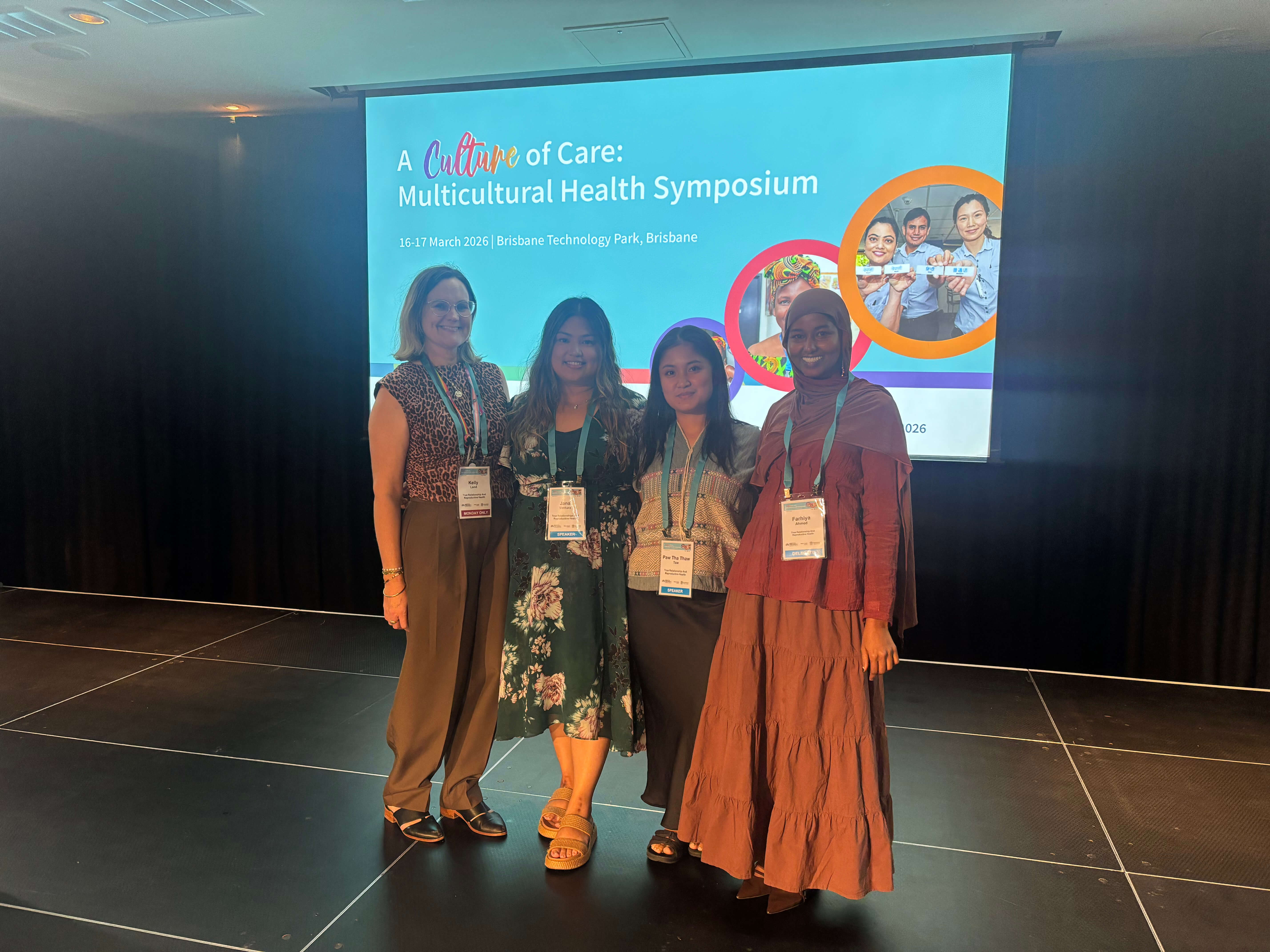
CAPTION: [L-R] Members of Team True at the symposium—A/Director Education Services, Kelly Land; Culturally Responsive Health Lead, Jana Ventura; Bilingual Health Educator, Paw Tha Thaw Taw; Bilingual Health Educator, Farhiya Mohamud.
From youth-led research to bilingual programs, True is helping Queensland’s multicultural communities navigate sexual and reproductive health — and we just shared the latest at a Brisbane-based symposium.
This week in Brisbane, two of True’s culturally responsive health team formed part of the lineup at A Culture of Health: Multicultural Health Symposium 2026, running 16-17 March.
Jana Ventura joined the line-up of keynote speakers, while her colleague Paw Tha Thaw Taw took to the stage with a compelling presentation as part of the broader program. Together, both True team members shared valuable lessons and innovative ideas on making healthcare more equitable, inclusive, and culturally responsive.
Hosted by Metro South Health, the symposium brought together healthcare professionals, researchers and community leaders to explore how health systems can deliver more inclusive and equitable care.
With more than 300 languages spoken across Queensland, and one in five residents born overseas, the symposium highlighted just how diverse our communities are — and how important it is that health services and information meet people where they’re at.
True’s presentations focused on just some of the work we do helping multicultural communities access sexual and reproductive health knowledge, reducing stigma, and giving people the confidence to navigate healthcare.
Youth voices shaping sexual health literacy
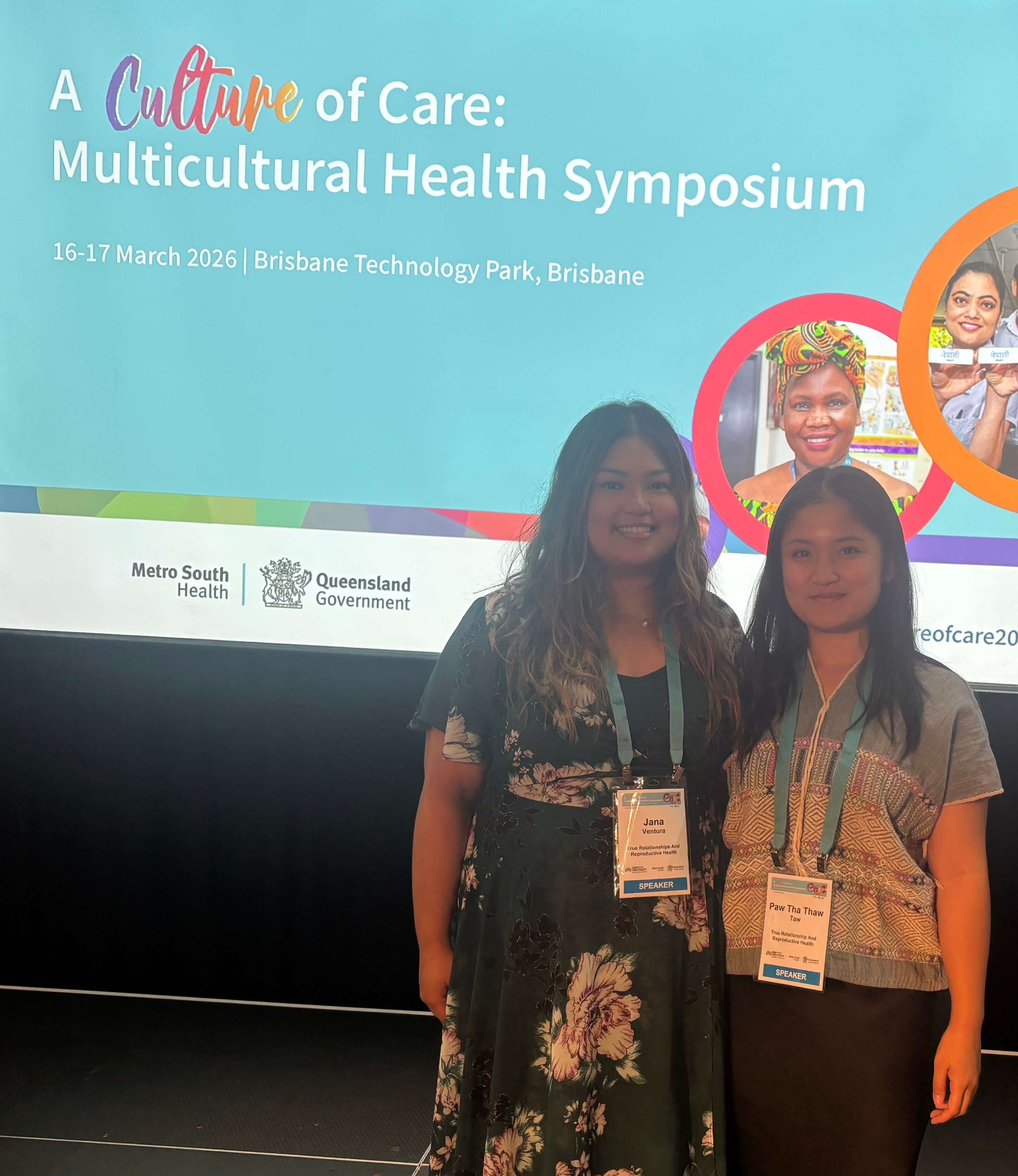
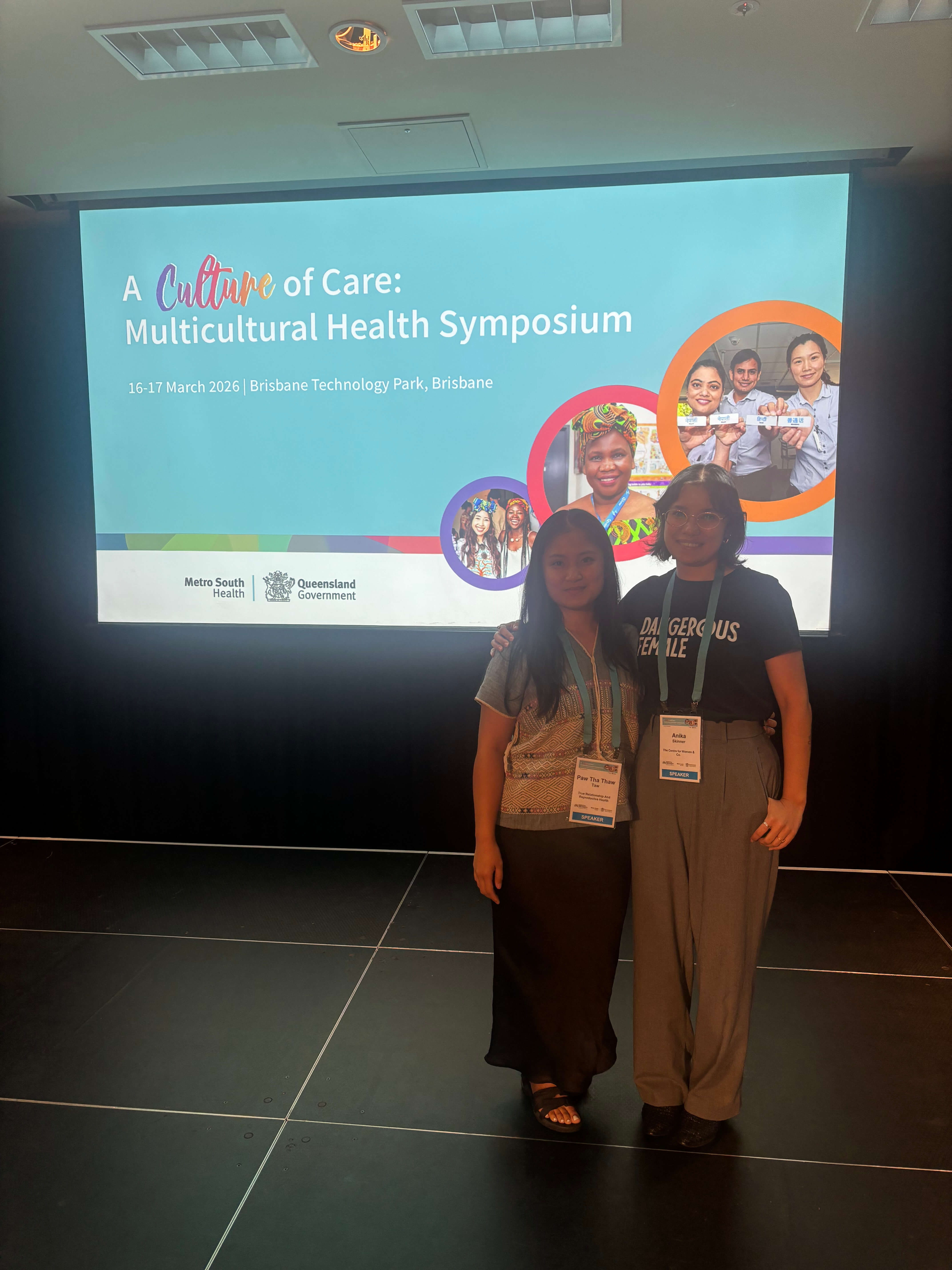
CAPTION: True's Bilingual Health Educators, Paw Tha Thaw Taw and her co-presenter Anika Skinner-Samad from Centre for Women & Co.
Jana Ventura, True’s Culturally Responsive Health Lead, shared insights from the youth-led research study she recently collaborated on, which explored sexual health literacy among culturally and linguistically diverse (CALD) young people.
Designed to make sure diverse perspectives and expertise were reflected, Jana worked alongside representatives from:
- Queensland University of Technology
- Nekawa Ltd (formerly Pasifika Young Peoples’ Wellbeing Network)
- University of Southern Queensland
- Curtin University
- Metro North Public Health Unit (Queensland Health)
- Ethnic Communities Council of Queensland
- La Trobe University.
The study, Co-designing a Health Literacy Framework: A Multiphase, Youth-Led Research Study to Support Health Providers Meet the Needs of CALD Youth, examined how young people from Pacific Islander, Northeast Asian, and Southeast Asian backgrounds find, understand and use sexual health information to make informed choices.
Participants aged 16–26 shared their experiences through interviews, surveys and focus groups. Many already demonstrated strong health literacy and relied on family, peers and online resources to guide their health decisions.
But they faced barriers, including stigma around sexual and mental health, and a lack of culturally responsive health services.
Through co-designed sessions, the young participants identified four key ways to strengthen sexual health literacy in Queensland, being:
- peer and community-led education and intergenerational dialogue
- age-appropriate, culturally affirming resources and services
- a diverse and culturally responsive health workforce
- communication that challenges stigma and builds trust.
One of the most powerful insights? Young CALD people are actively shaping how they access health information and services. This research, however, highlights the importance of community-driven approaches that support this autonomy.
The findings have informed a sexual health literacy framework offering practical guidance for policymakers, educators, clinicians and researchers aiming to deliver culturally responsive care for CALD youth.
Jana said: “What excites me is that this isn’t just research sitting on a shelf – it’s an actionable framework that puts young people at the centre of their own sexual health education.
“By listening to their experiences and insights, we can create guidance that really resonates and makes a difference in their lives and the lives of their families and communities.
"Our goal is to help close gaps in sexual health knowledge and access. This framework gives professionals the tools to develop, model and deliver care that’s equitable, culturally safe, and responsive to the needs of all young people."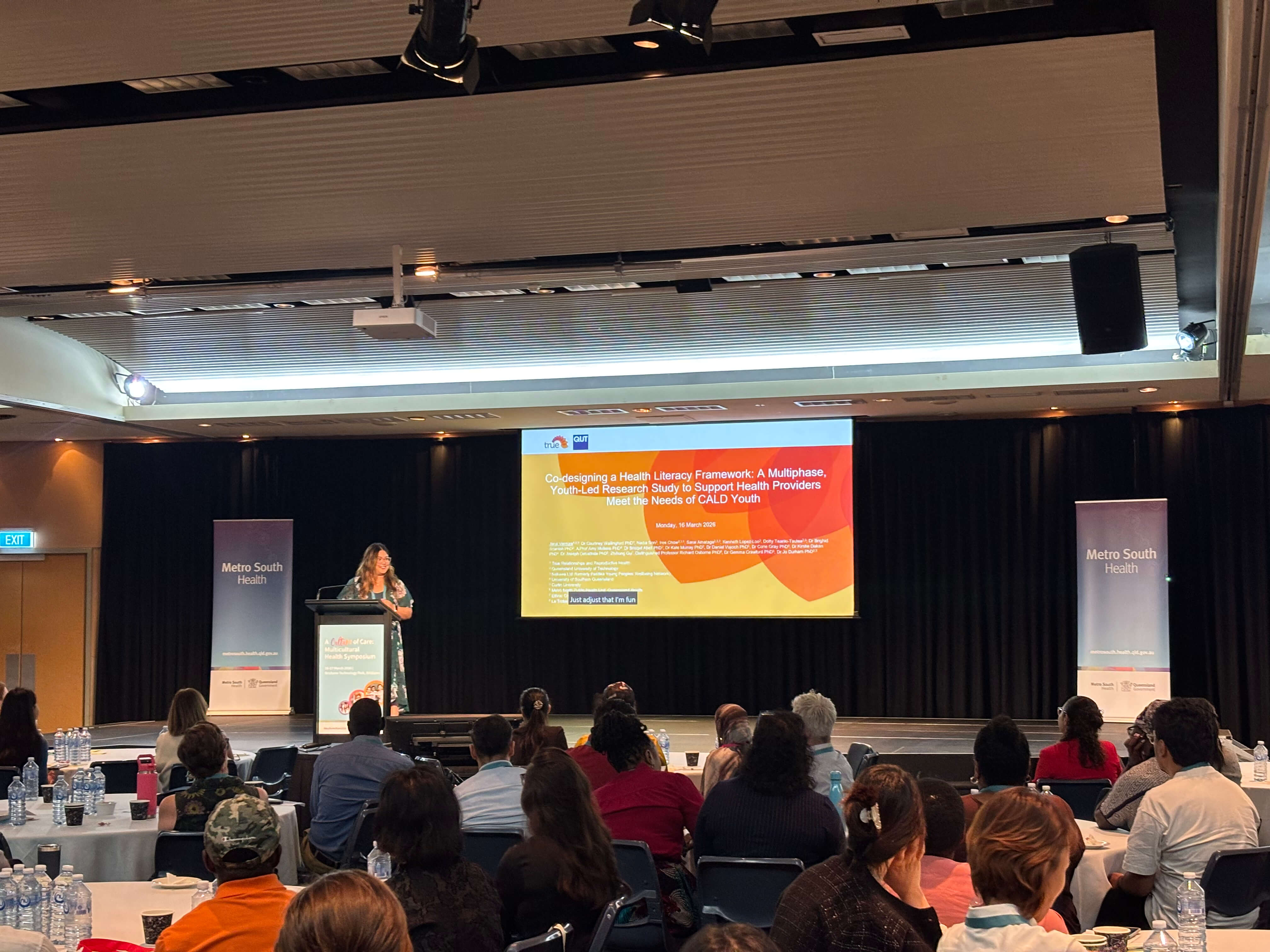
Breaking down barriers for CALD women’s health
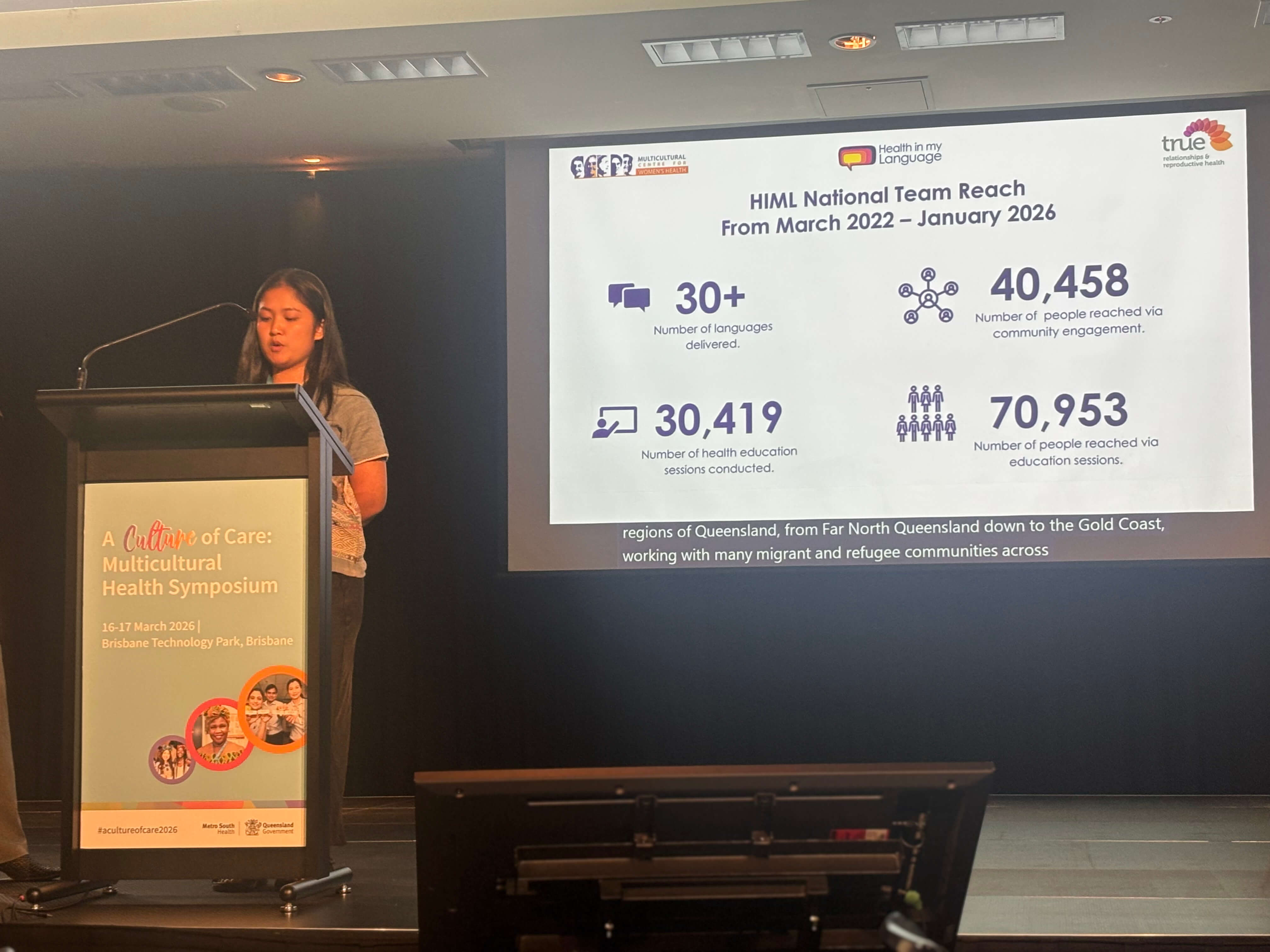
Paw Tha Thaw Taw, one of True’s bilingual health educators, presented on the Health in My Language (HIML) program.
Originally launched in 2022 to improve COVID-19 vaccine literacy, the program has grown into a national sexual and reproductive health initiative, helping migrant and refugee women access the information they need.
HIML is led nationally by the Multicultural Centre for Women’s Health and delivered in Queensland by True. We work alongside community leaders and partner organisations to bring this important work to our multicultural communities.
Together with Anika Skinner-Samad from Centre for Women & Co., Paw Tha presented on the safe spaces created by HIML for CALD women to ask questions and learn about topics like menstruation, pelvic pain, reproductive health, mental wellbeing, and navigating healthcare systems — all in ways that respect cultural beliefs and learning styles.
HIML participants have reported that the interactive discussions, and biculturally facilitated program delivery have made them feel more confident discussing their health, less ashamed, more informed, and better equipped to advocate for themselves in healthcare settings.
Kelly Land, A/Director Education Services, reflected: "Being able to deliver sessions in participants’ own languages and in culturally familiar ways changes everything. It’s amazing to see how quickly trust and engagement grow when people feel truly understood.
"The impact of HIML goes beyond each session — women take what they learn back to their families and communities, spreading knowledge and confidence even further," she said.
When the community drives change, everyone benefits
Both presentations highlighted something we know at True: solutions work best when they come from the community.
Programs like HIML and research co-designed with CALD youth demonstrate the power of culturally responsive, community-led initiatives to build trust, improve health knowledge, and make services more accessible.
At True, we support people of all cultural backgrounds with their sexual and reproductive health, and healthy relationship wellbeing.

